 RigLoot
Star Trek Fleet Command Review: A Faithful Trek 4X That Rewards Deep Pockets
Scopely's galactic strategy MMO nails the Star Trek fantasy across ships and eras - as long as you're happy grinding, or paying, to keep pace.
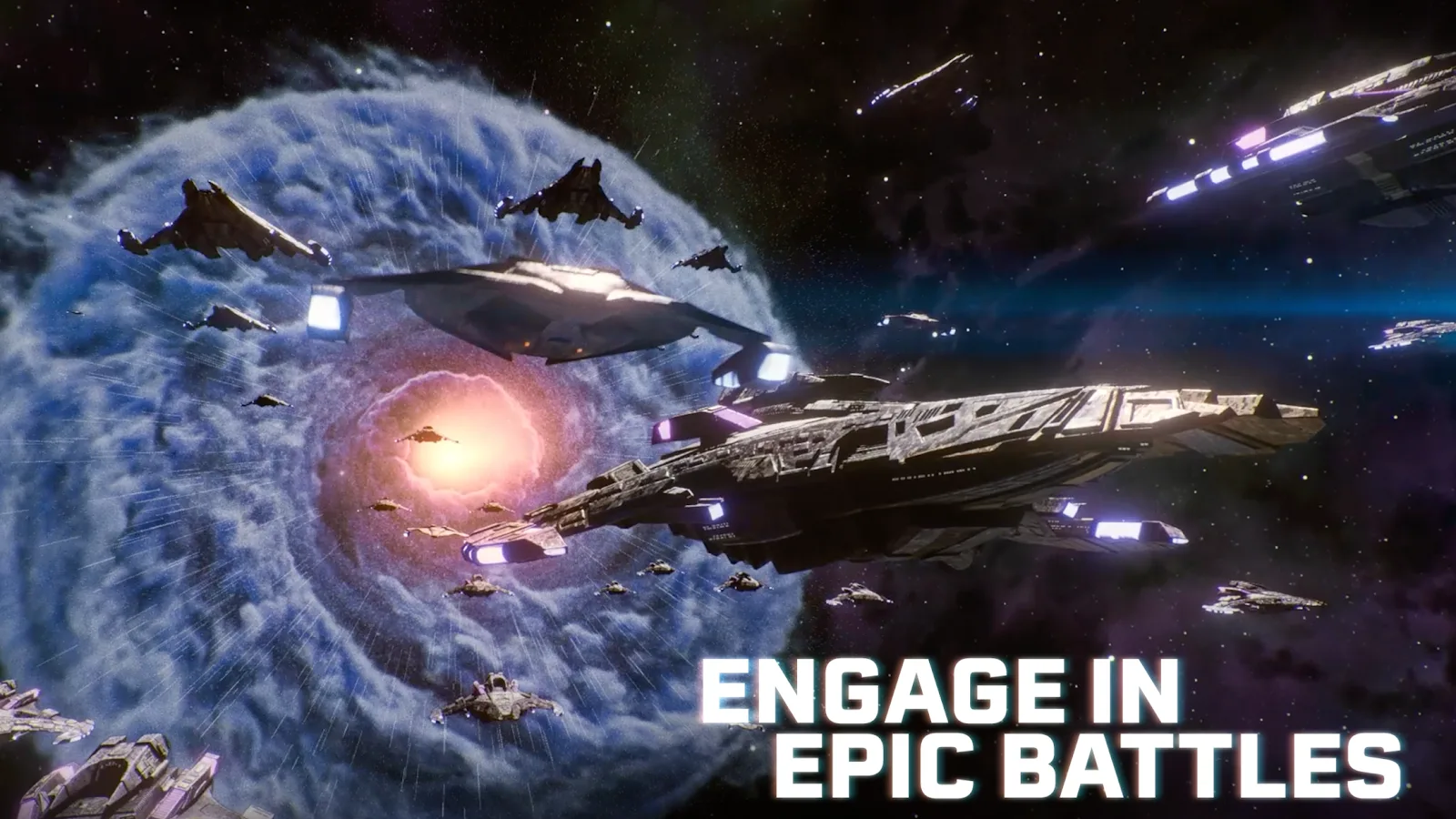
Image: · Scopely (Google Play official listing) · Official promotional screenshot, editorial use
Reviews verdict
Scopely's galactic strategy MMO nails the Star Trek fantasy across ships and eras - as long as you're happy grinding, or paying, to keep pace.
Star Trek Fleet Command is what happens when a licensed strategy MMO takes its source material seriously. Developed by Ireland's Digit Game Studios and published by Scopely, it is a 4X-flavored space game that lets you build a fleet, explore the galaxy and rub shoulders with Kirk, Spock and dozens of characters pulled from across the Star Trek universe. We ran it on the Windows client - it is also on Mac - and found a genuinely absorbing strategy game with the familiar free-to-play strings attached.
Gameplay
The loop blends 4X, RPG and MMO ideas. You explore star systems, mine resources, build and upgrade a roster of iconic ships, recruit and level officers whose synergies define your combat effectiveness, and take on missions that lean on real Trek lore. Ship-to-ship combat resolves in real time using rock-paper-scissors ship classes - interceptors, explorers and battleships - so fleet composition and officer pairings matter as much as raw power. There is a light puzzle in matching the right captain, bridge crew and below-deck officers to a hull, and a well-tuned mid-tier ship can punch above a lazily-built bigger one. Alliances add coordinated PvP, territory control and shared goals, and much of the late game revolves around who your neighbours are and whether they leave you alone.
Content and progression
Since launch the game has expanded well beyond its original Kelvin-timeline premise to fold in Discovery, The Next Generation, Deep Space Nine, Lower Decks, Strange New Worlds and more. That means a steady stream of missions, events, and ships to chase, plus a long officer-collection metagame. Progression is gated by building timers, resource tiers and ship blueprints, so it is a marathon measured in weeks and months, not hours.
For Trek fans, warping into a system and recognizing the ships and characters is a real thrill - right up until a build timer asks you to wait a day or pay to skip it.
Tech and monetization
The presentation is solid, with attractive ship models and readable menus that scale nicely to a PC screen. It launched in 2018 and has been polished heavily since, winning Webby Awards along the way and holding generally positive user ratings. It is free to play, with in-app purchases running from about 4.99 to 99.99 dollars. As with its peers, spending accelerates you past the grind, and reviewers have raised fair pay-to-win concerns: competitive standing tracks closely with time invested or money spent. Refined resources, ship blueprints and event ranking rewards all funnel toward paid bundles, and the game is not shy about surfacing offers when you hit a wall. A disciplined free player can still carve out a comfortable corner of the galaxy, but the leaderboard is another matter.
Who it's for
This is a natural fit for Star Trek fans and patient strategy players who enjoy long-term fleet-building and alliance play. If you dislike build timers or being outpaced by paying rivals, the friction will wear on you.
Verdict
Star Trek Fleet Command is one of the more respectful licensed strategy games out there, with real depth and a loving use of the IP. It is held back by the usual timer-and-wallet economy, but the fantasy is strong enough - and the free path viable enough - to carry it. Trek fans should absolutely give it a warp. 6.8/10.
Pros
- Faithful, generous use of Star Trek characters and ships
- Satisfying officer-synergy and fleet-composition systems
- Deep long-term content spanning multiple Trek series
Cons
- Progression is heavily gated by build timers
- Pay-to-win pressure at the competitive end
- Grind can feel slow without spending